A wine cellar is one of the most technically demanding and emotionally rewarding spaces in a luxury home. It must perform as a precisely controlled environment for long-term storage while serving as a destination that invites lingering, conversation, and the quiet pleasure of selecting a bottle for the evening. At Gold and Home, we approach wine cellar design as a discipline that sits at the intersection of engineering, architecture, and sensory experience.
Climate Control: The Invisible Foundation
Wine is a living substance that responds to its environment. The ideal storage conditions are well established: a consistent temperature between 55 and 58 degrees Fahrenheit with relative humidity maintained between 60 and 70 percent. Achieving these conditions reliably requires more than an off-the-shelf cooling unit. We work with specialized climate engineers to design vapor barrier systems, insulation strategies, and redundant cooling solutions that maintain stability regardless of seasonal temperature swings or power interruptions. The cooling system itself is selected for quiet operation, because a wine cellar should feel like a sanctuary, not a mechanical room.
Racking, Storage, and Display
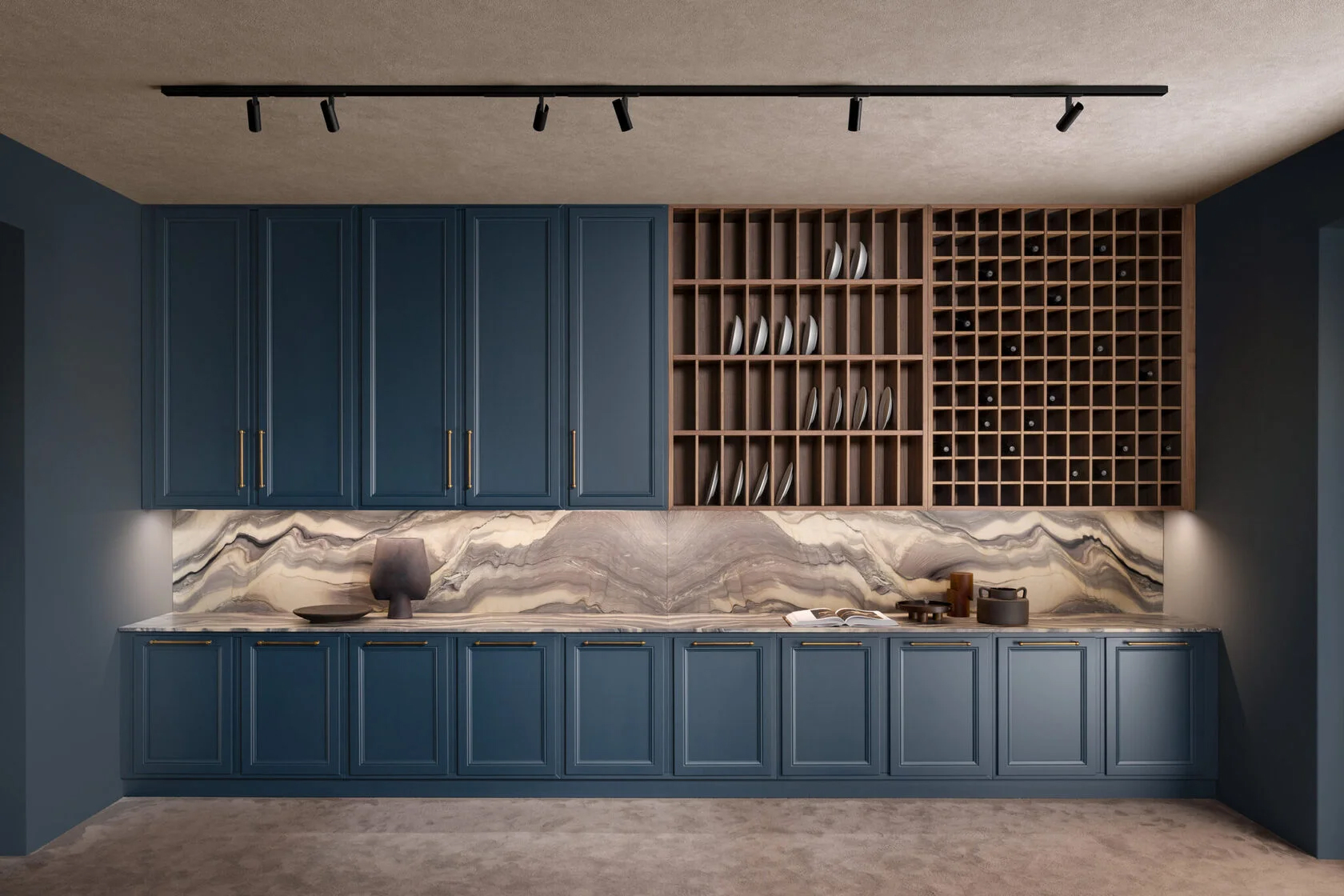
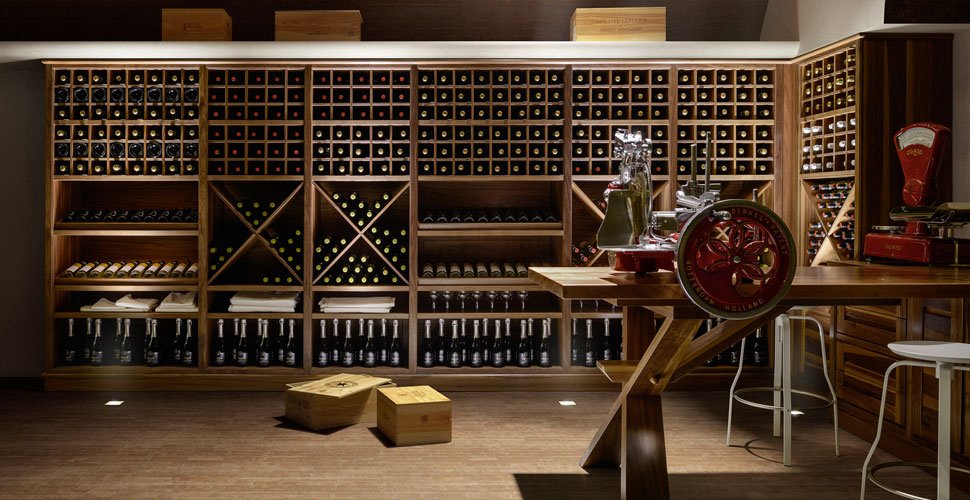
The racking system defines both the capacity and the visual character of the cellar. Our Italian-crafted wood racking is built from the same hardwoods used in our kitchen and closet collections, ensuring material consistency throughout the home. We design for a mix of individual bottle storage, case storage for recent acquisitions awaiting proper aging, and display alcoves that showcase prized vintages at eye level. For serious collectors, we integrate inventory management systems that allow tracking of every bottle by position, provenance, and optimal drinking window.
Atmosphere and Finishing Touches
Lighting in a wine cellar must balance visibility with restraint. We favor warm-toned LED systems on dimmers, recessed into the racking structure to illuminate labels without introducing heat. Natural stone flooring, whether reclaimed terracotta, aged limestone, or polished slate, grounds the space and provides thermal mass that contributes to temperature stability. A tasting area with a solid wood table, comfortable seating, and considered acoustics transforms the cellar from a storage facility into a room where memories are made over shared bottles and unhurried evenings.